
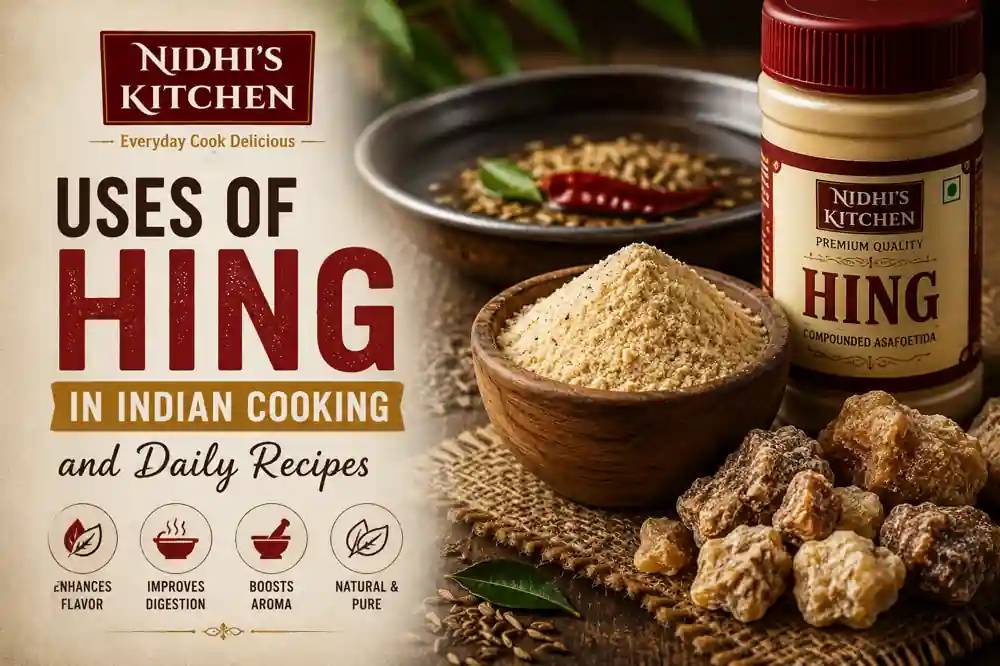
Indian cooking is known for its rich flavors, aromatic spices, and traditional recipes that have been passed down through generations. Among these spices, hing (asafoetida) holds a special place in almost every Indian kitchen. Even though it is used in very small quantities, hing has the power to completely transform the taste and aroma of a dish.
Whether you are preparing dal, sabzi, curry, kadhi, or traditional Gujarati recipes, hing adds a unique flavor that enhances everyday cooking.
What is Hing?
Hing, also known as asafoetida, is a spice obtained from the resin of certain plants. It has a strong aroma in its raw form but develops a rich and savory flavor when added to hot oil or ghee.
Because of its distinctive taste and aroma, hing is widely used across Indian cuisine.
Why Hing is Used in Indian Cooking
Hing is often called a hidden flavor enhancer because just a small pinch can make dishes taste richer and more balanced.
Reasons people commonly use hing:
- Enhances food aroma
- Adds authentic Indian flavor
- Complements spices and herbs
- Works well in vegetarian recipes
- Commonly used in traditional cooking
Popular Uses of Hing in Daily Recipes
1. Dal and Lentils
One of the most common uses of hing is in dal preparations.
When hing is added to hot oil along with cumin seeds and spices, it gives dal a rich and delicious aroma.
Popular dishes:
- Toor dal
- Moong dal
- Masoor dal
- Dal tadka
2. Sabzi (Vegetable Dishes)
Many Indian vegetable dishes use hing in the tempering process.
Hing works especially well with:
- Potato sabzi
- Bhindi (okra)
- Cabbage dishes
- Mixed vegetable recipes
3. Kadhi
Traditional Gujarati and North Indian kadhi recipes commonly use hing for additional flavor.
A small amount of hing in hot ghee enhances the overall taste and creates a more authentic recipe.
4. Pickles and Achar Recipes
Hing is also an important ingredient in many homemade pickles.
Popular pickle combinations include:
- Mango pickle
- Lemon pickle
- Mixed vegetable pickle
It blends perfectly with spices and achar masala.
5. Snacks and Namkeen
Indian snacks often include hing because it gives a savory and flavorful taste.
Examples:
- Kachori
- Mathri
- Sev
- Farsan
- Khakhra
How to Use Hing Properly
For the best flavor:
- Heat oil or ghee
- Add a small pinch of hing
- Immediately add cumin seeds or spices
- Continue cooking
Only a small quantity is usually required because hing has a strong flavor.
Tips for Storing Hing
To maintain freshness:
- Store in an airtight container
- Keep away from moisture
- Store in a cool, dry place
- Avoid direct sunlight
Why Choose Premium Quality Hing?
Good quality hing offers:
✓ Strong aroma
✓ Rich flavor
✓ Better cooking experience
✓ Authentic traditional taste
Premium ingredients can make a noticeable difference in everyday cooking.
Frequently Asked Questions
Can hing be used daily?
Yes, hing is commonly used in daily Indian cooking in small quantities.
What dishes use hing?
Dal, sabzi, kadhi, pickles, snacks, and traditional Indian recipes frequently use hing.
How much hing should I use?
Usually a small pinch is enough.
Is hing important in Indian cooking?
Yes, hing has been used in Indian kitchens for generations because of its distinctive flavor and aroma.
Bring authentic Indian flavor to your kitchen with quality spices and traditional ingredients from Nidhi’s Kitchen.